
How to Recognise a Genuine Leather Bag: The Complete Guide
Why is it So Difficult to Recognize Real Leather?
Synthetic material technology has made great strides in recent years. Today's faux leather is no longer the rigid, shiny material of twenty years ago: it has realistic textures, a soft feel, and even an odor that mimics that of natural leather. According to industry estimates, about 30% of bags sold online as "leather" actually contain synthetic or mixed materials.
The problem is not just aesthetic. A real leather bag, if cared for, lasts decades and improves with age — developing that unique patina that connoisseurs call "lived-in." A
faux leather bag, on the other hand, begins to peel and deteriorate after 1-2 years, inevitably ending up in a landfill.
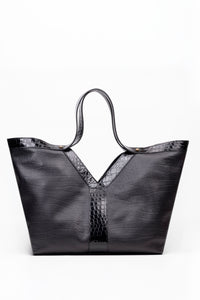
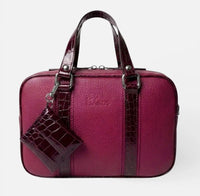
At Kairos Collection, we work exclusively with the highest quality leathers — many of which come from the surplus stock of major luxury brands. This has given us a deep knowledge of materials, which we now share with you.
6 Methods to Recognize Real Leather
1. The Touch Test
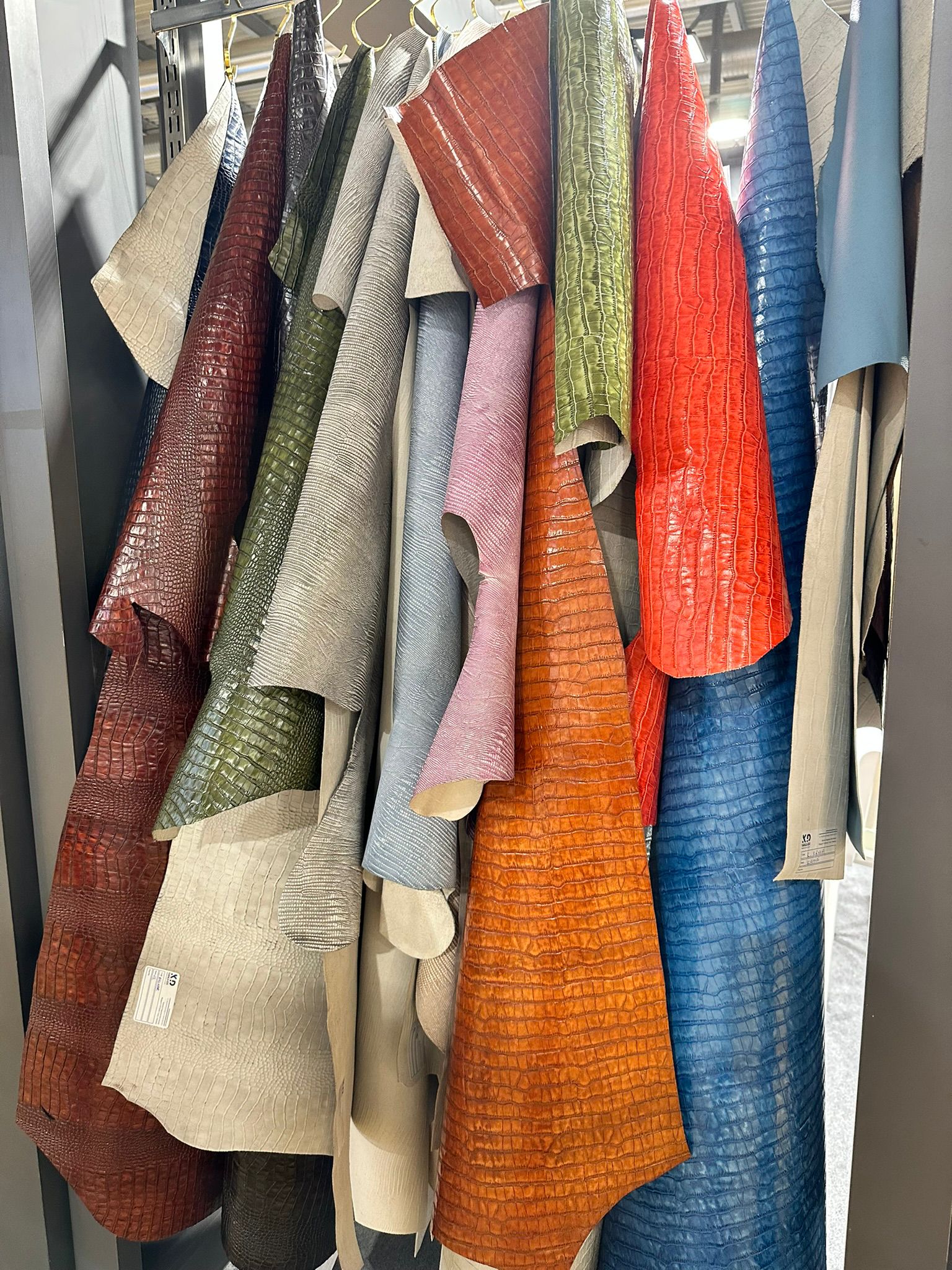
Real leather has an irregular, slightly grainy texture to the touch. Running your fingers
over the surface, you will feel small natural imperfections, pores, veins, slight variations.
These "imperfections" are actually a sign of authenticity.
Faux leather, on the contrary, has a uniform and repetitive texture. If you observe the
pattern carefully, you will notice that it repeats identically, like wallpaper. Real leather never repeats.

2. The Smell Test
This is perhaps the most immediate method. Real leather has a characteristic, earthy,
rich, slightly sweet smell. It is an odor that cannot be convincingly replicated artificially.
Faux leather has a chemical, plastic smell, reminiscent of glue or solvent. Even when treated with fragrances that mimic leather, the underlying smell remains synthetic.
3. The Water Test
Pour a drop of water onto the surface of the bag. Real leather is porous and absorbs
water slowly; you will see the drop penetrate the material within a few seconds.
Faux leather, being waterproof, will cause the drop to slide off without being absorbed.
Caution: Some high-quality leathers are treated with water-repellent finishes that can make this test less reliable. In that case, try it on a less exposed area, such as the inside of a pocket.
4. The Edge Test
Look closely at the edges of the bag where the material is cut. Real leather shows
a fibrous edge, with visible layers of natural fibers. Faux leather shows a clean edge,
often with a layer of fabric or foam visible beneath the surface.
In quality handcrafted products, such as those from Kairos Collection, the edges are hand-finished with a technique called "edge painting," a process that requires multiple
coats and gives the edge a smooth, shiny appearance, impossible to replicate on
an industrial scale with faux leather.

5. The Crease Test
Gently fold the bag's material. Real leather folds naturally,
forming soft, irregular wrinkles, similar to those on human skin. When released, the
wrinkles gradually disappear.
Faux leather folds rigidly, forming sharp, geometric creases. Often,
when folding faux leather, a slight crackling sound is heard, a sound that real leather does not
produce.
6. The Heat Test
Place the palm of your hand on the surface of the bag for 10 seconds. Real leather
warms up upon contact with the body; it is a "living" material that reacts to temperature.
When you remove your hand, the touched area will be slightly warmer.
Faux leather remains cold or becomes damp upon contact. It does not "breathe" like natural leather, which is why faux leather bags tend to cause sweating and retain moisture.
Conclusion
Recognizing real leather is not difficult once you know what to look for.
If you want to discover what it means to own a handcrafted Italian real leather bag,
made with reclaimed leather from major luxury brands, visit our collection
at kairoscollection.it.
Each Kairos bag is unique, because each leather has a different story to
tell.