
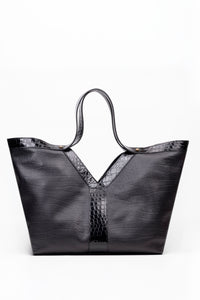
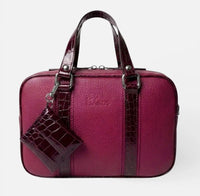
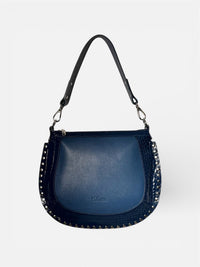
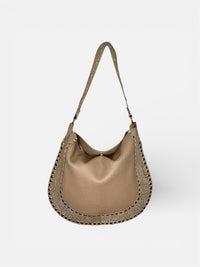
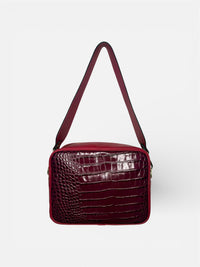
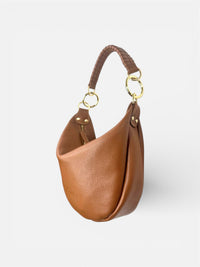
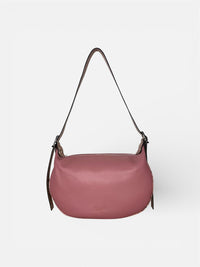
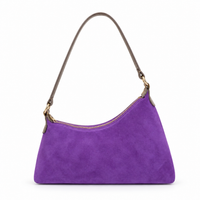
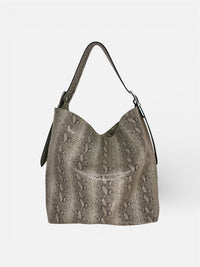
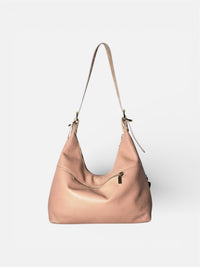
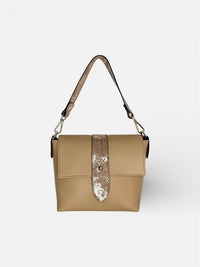

Italian Handcrafted Bags: Why Made in Italy Makes the Difference
Italy is the homeland of leather goods. For centuries, our artisans have transformed leather into objects desired by the whole world.
But what truly makes an Italian artisanal bag special? And how does it differ from a mass-produced industrial bag?
In this article, we take you inside the world of artisanal leather goods, a world made of expert hands, noble materials, and an unparalleled tradition.
The Tradition of Italian Leather Goods: A Millennia-Old History
Leather processing in Italy has roots dating back to Roman times, when the tanners of the Tiber produced leather for the army and nobility. But it was in the Florentine Renaissance that Italian leather goods achieved excellence: the workshops of Ponte Vecchio and Oltrarno became the global benchmark for leather processing.
Today, Italy is the leading European producer of leather goods and the second in the world after China. The sector generates a turnover of over 11 billion euros and employs tens of thousands of artisans. The districts of Santa Croce sull'Arno in Tuscany and Solofra in Campania are recognized as world-class centers of excellence for tanning and leather processing.
But the true value of Italian leather goods is not in the numbers. It's in the hands.

What Makes an Artisanal Bag Different from an Industrial One
Time
An industrial bag is produced in a few minutes on an assembly line. Every operation is automated, standardized, optimized for speed. The result is a uniform, predictable product, identical to thousands of others.
An artisanal bag requires 8-16 hours of manual work. Every stage – cutting the leather, stitching, edge painting, hardware assembly – is performed by hand by an artisan who controls every detail. The result is a unique piece, with small variations that make it unrepeatable.
In the workshops we collaborate with, each bag passes through the hands of at least 3 different artisans, each specialized in a phase of the process. This ensures that every step receives the attention and expertise it deserves.
Materials
The mass fashion industry uses inexpensive leathers, often from countries where quality and environmental standards are less rigorous. These leathers are treated with aggressive chemical processes that make them uniform but fragile.
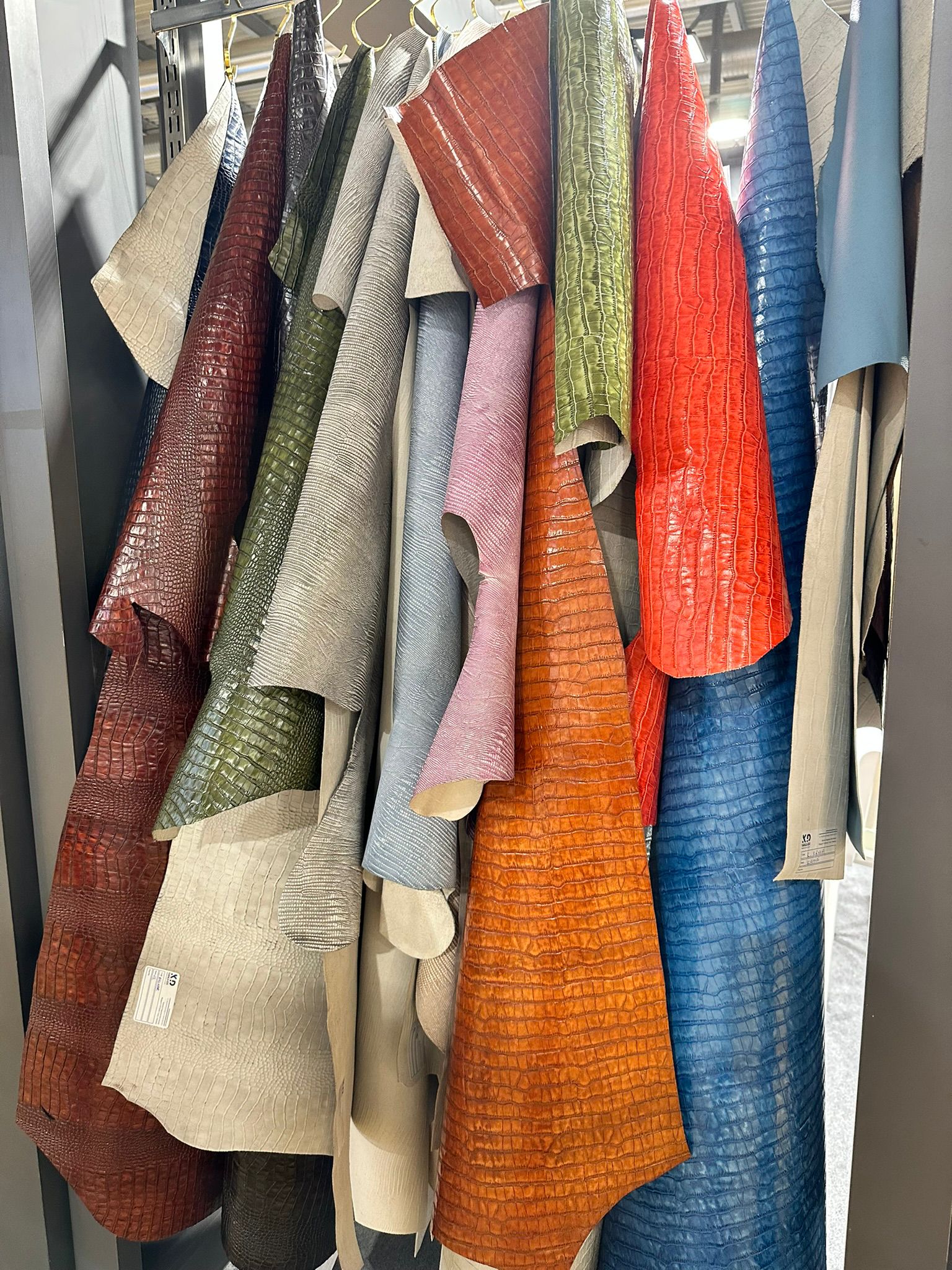
Italian artisanal leather goods select leathers with meticulous care. Each hide is examined by hand to check for defects, grain consistency, softness, and resistance. Only leathers that pass this inspection are used. At Kairos Collection, we have taken this principle even further: we use salvaged leathers from major fashion houses. These are production surpluses, high-quality materials that are not used for planning reasons. We recover them and give them a second life, creating bags that combine luxury quality with sustainability.
Technique
Italian artisanal leather goods are based on techniques passed down from generation to generation. Some of these techniques have remained unchanged for centuries.
Hand cutting: The artisan places the pattern on the leather, avoiding areas with defects and utilizing the best parts of the hide. This requires experience and a trained eye, as each leather is different and requires different decisions.
Saddle stitching: A technique that uses two needles simultaneously, creating an extremely resistant stitch that does not unravel even if a stitch breaks. It is the same technique used for horse saddles, hence the name, and guarantees superior durability to any machine stitching.
Edge painting: The edges of the leather are hand-painted with multiple coats of color, smoothed, and polished. This process requires patience and precision but gives the finished product an unmistakable premium look.
Hot stamping: Some decorative details, such as the logo, are impressed onto the leather with hot irons, creating embossed patterns that are unique to each artisanal workshop.

How to Recognize True Made in Italy
Not everything bearing the "Made in Italy" label is the same. Italian regulations stipulate that a product can be labeled Made in Italy if the "substantial processing" takes place in Italy. This means that, in theory, a bag could be cut and partially assembled abroad, then finished in Italy and sold as Made in Italy.
To recognize true artisanal Made in Italy, look for these signs:
Transparency in production: Authentic artisanal brands are proud to show where and how they produce. They seek transparency, not hide it. If a brand doesn't say where it produces, there's probably a reason.
The workshop's history: A true artisanal workshop has a history, a face, a place. It is not an anonymous entity. At Kairos Collection, for example, we try to show through photos and videos on social media some of the production processes that take place in the workshops we work with.
Price: A genuine Italian artisanal leather bag cannot cost €70. Quality materials, specialized labor, and the time required for manual processing have a cost. A price that is too low is almost always a red flag.
The Value of Sustainability in Leather Goods
Sustainability has become a central theme in the fashion industry, and leather goods are no exception. Industrial leather production has a significant environmental impact: from chrome tanning, which produces toxic wastewater, to material waste in mass production.
Italian artisanal leather goods are responding to this challenge in several ways:
Vegetable tanning: More and more Italian tanneries are returning to traditional tanning with natural tannins, a longer but enormously less polluting process.
Leather recovery: Some companies, like Kairos Collection, have built their business model on recovering surplus leathers from major fashion houses. This approach eliminates the waste of valuable materials and reduces the demand for new leather production.
Local production: The short supply chain of Italian artisanal leather goods drastically reduces the carbon footprint compared to globalized production, where materials cross multiple continents before becoming a finished product.
Why Invest in an Italian Artisanal Bag
Purchasing an Italian artisanal bag is not just a style choice. It's a value choice.
Durability: A genuine leather artisanal bag lasts 20-30 years. The cost per year of use is lower than that of an inexpensive bag that needs to be replaced every 1-2 years.
Uniqueness: Each artisanal bag is a unique piece. The small variations in the leather, stitching, and finishes make it unrepeatable. No other person in the world will have exactly your bag.
Sustainability: Choosing craftsmanship means choosing quality over quantity, durability over disposability, local over global.
Support for the local economy: Every artisanal bag purchased supports a workshop, an artisan, a tradition. It is an investment in the culture and economy of the region.
Discover Kairos Collection
Kairos Collection was born from Federica's passion for Italian craftsmanship and the belief that luxury can be sustainable. Every Kairos bag is handmade by expert artisans with whom we collaborate, using salvaged leathers from major luxury fashion houses.
The name "Kairos" comes from ancient Greek and means "the right moment" — that perfect moment when everything aligns. For us, it is the moment when leather destined for waste meets the hands of an artisan and becomes something unique.
Discover our collection at kairoscollection.it.